Signal jamming: What it is and how to protect yourself


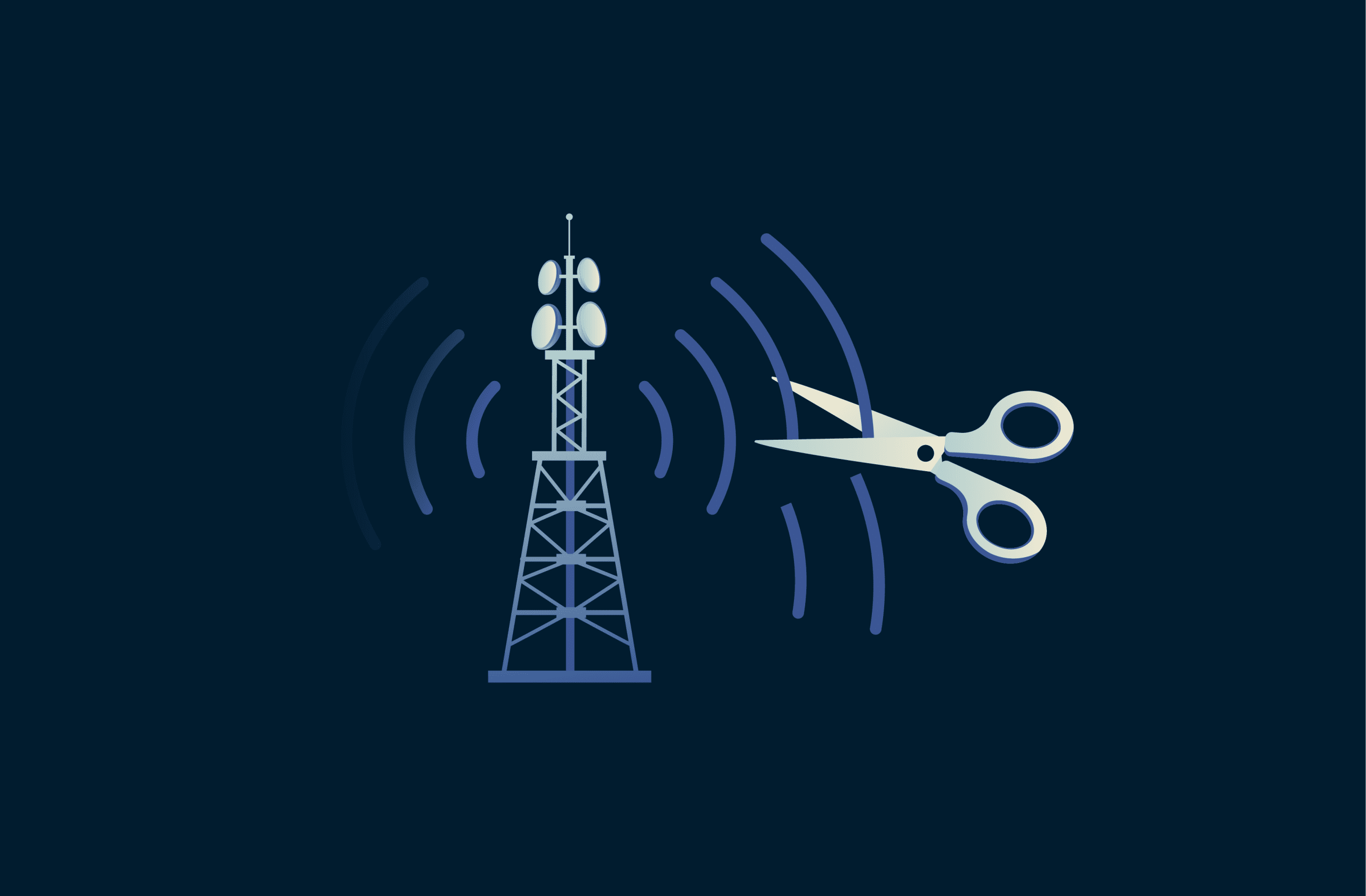
Signal jamming is the deliberate disruption of wireless services, affecting everything from cell signals to GPS. If your phone suddenly loses signal or navigation apps stop working, interference may be a factor.
Understanding how signal jamming works helps explain why these disruptions are difficult to diagnose and why many signs overlap with normal network issues. This article explains what jamming is, how it differs from everyday signal problems, how detection works, and what users can realistically do when disruptions occur.
How signal jamming works
Signal jamming works by transmitting radio-frequency energy on the same frequency bands used by a target signal. The added interference can make communication unreliable or impossible within a specific area by raising the noise level or overwhelming legitimate transmissions, similar to how a denial-of-service (DoS) attack overwhelms networks or servers.
How jamming differs from normal signal problems
Jamming refers to deliberate interference with communications. Most everyday signal problems are unintentional and result from normal interference, network congestion, distance from cell towers, or physical obstructions such as buildings and terrain. Because these conditions can have similar signs, distinguishing jamming from routine signal issues often requires technical analysis.
Types of jamming techniques
Different signal jamming techniques serve various purposes depending on the attacker's objectives and resources.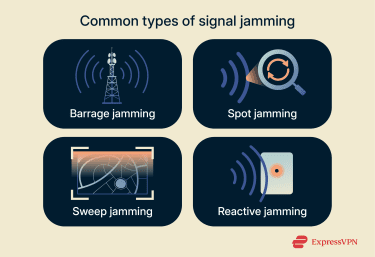
Barrage jamming
Barrage jamming is when interference is spread broadly across a wide range of radio frequencies at the same time. Instead of targeting one specific signal, it “floods” a large portion of the wireless spectrum with noise, making it harder for legitimate signals in that range to get through.
Spot jamming
Spot jamming is a form of signal interference that concentrates on a single, narrow range of radio frequencies, making communication on that specific frequency difficult or impossible.
Sweep jamming
Sweep jamming is a type of signal interference that continuously moves across a range of radio frequencies, briefly disrupting communications on each frequency as it passes.
Reactive jamming
Reactive jamming is a type of signal interference that only activates when it detects a signal, briefly disrupting communication by responding to transmissions in real time.
Technologies commonly targeted by jamming
Signal jamming can affect numerous wireless technologies that people use daily, such as:
- Cell networks: Calls, texts, and mobile data can be delayed, dropped, or completely blocked.
- Wi-Fi: Wireless networks may experience slow connections, dropped signals, or intermittent service.
- GPS: Signals from satellites can be disrupted, making it difficult to determine location or navigate accurately.
- Bluetooth: Connections between devices can be interrupted, causing connection issues to devices like speakers, keyboards, and headphones.
- Key fob/vehicle remote systems: Signals used to lock, unlock, or start vehicles can be temporarily blocked or delayed.
Is signal jamming legal?
Signal jamming is generally prohibited because it involves intentionally interfering with licensed wireless communications, which could include emergency services, mobile networks, and personal devices. Regulations vary by country, but operating jamming equipment can lead to fines or other enforcement actions, especially if public safety services are affected.
How to detect signal jamming
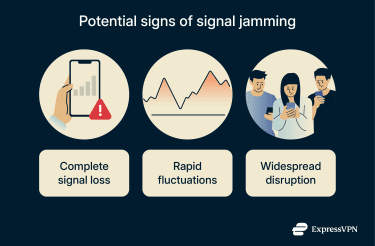 Signal jamming can be difficult to detect because many of the signs are also indicators of normal network issues. Issues like outages, congestion, maintenance, or coverage gaps can produce the same symptoms people often associate with jamming, making it difficult to tell the difference based on experience.
Signs may include sudden or widespread loss of signal, rapid changes between strong signal and no service, or multiple devices in the same area being affected at the same time. In some cases, connectivity may improve when you move away from an area, or you may see inconsistent performance across wireless technologies such as cellular, Wi-Fi, or Bluetooth.
However, these signs are not unique to jamming and they can’t confirm its presence. Definitive identification requires technical analysis, such as spectrum measurements or carrier-level investigation, which is typically handled by network operators or regulatory authorities rather than users.
Tools and apps that help detect jamming
The most reliable way to detect jamming is to use specialized equipment like spectrum analyzers. These professional-grade tools are used by regulators, network operators, and authorized security teams to measure signal power across frequency ranges and identify unusual interference with legitimate transmissions. Analyzing noise levels and signal behavior across the spectrum is the best way to confirm jamming activity.
There are options available to consumers, but they don’t typically measure raw spectrum data or interference patterns. They may indicate that something is unusual, but they can’t determine the source or confirm whether jamming is involved.
For suspected jamming, the most practical test is to move away from the affected area. Because jamming is usually localized, the signal may return after moving away from the area. However, this behavior is also common in normal coverage gaps and doesn’t necessarily confirm that signal jamming is occurring.
What you can and can’t do about jamming
Signal jamming affects wireless communication at the radio level, which means individual users have limited ability to prevent it. Detecting and stopping jamming typically requires help from network operators and regulators.
Can a VPN help bypass signal jamming?
No. A virtual private network (VPN) can’t bypass signal jamming because jamming disrupts the wireless signal itself, not the data traveling over it. A VPN only encrypts internet traffic, so if the connection is blocked or interfered with at the radio level, the VPN has no signal to protect or route.
Maintaining communication during disruption
Jamming can’t be bypassed, so having access to both cellular data and Wi-Fi can help maintain connectivity when there’s a signal disruption. It’s also worthwhile to consider hardwiring where possible rather than depending on wireless connections, as wired systems aren’t vulnerable to signal jamming.
How to report suspected jamming
If you suspect deliberate jamming, you can contact local law enforcement or file a complaint with regulatory authorities, such as the Federal Communications Commission (FCC) in the U.S. or Ofcom in the U.K.
FAQ: Common questions about signal jamming
What is a signal jammer?
A signal jammer is a device that deliberately transmits interference on the same radio frequencies as mobile phones and other wireless devices in order to disrupt communication.
Can I detect if someone is jamming my signal?
There is no reliable way for an individual user to spot whether someone is jamming your signal. There are, however, some signs to look out for, such as sudden signal disappearance despite previous good coverage, rapid signal fluctuations, and multiple devices being affected simultaneously. If you suspect your signal is being jammed, it’s best to contact your network carrier.
How do governments handle signal jamming threats?
Governments rely on national communications regulators and law‑enforcement agencies (such as spectrum authorities and telecommunications regulators) to detect illegal jamming, investigate offenders, and seize equipment. Penalties could include fines or criminal charges, especially if emergency or public safety communications are affected.
What technologies are most affected by jamming?
Signal jamming primarily affects wireless technologies that rely on radio frequencies, like cell networks, Wi-Fi, GPS, Bluetooth, and key fob systems.
Take the first step to protect yourself online. Try ExpressVPN risk-free.
Get ExpressVPN