Expressvpn Glossary
Software repository

What is a software repository?
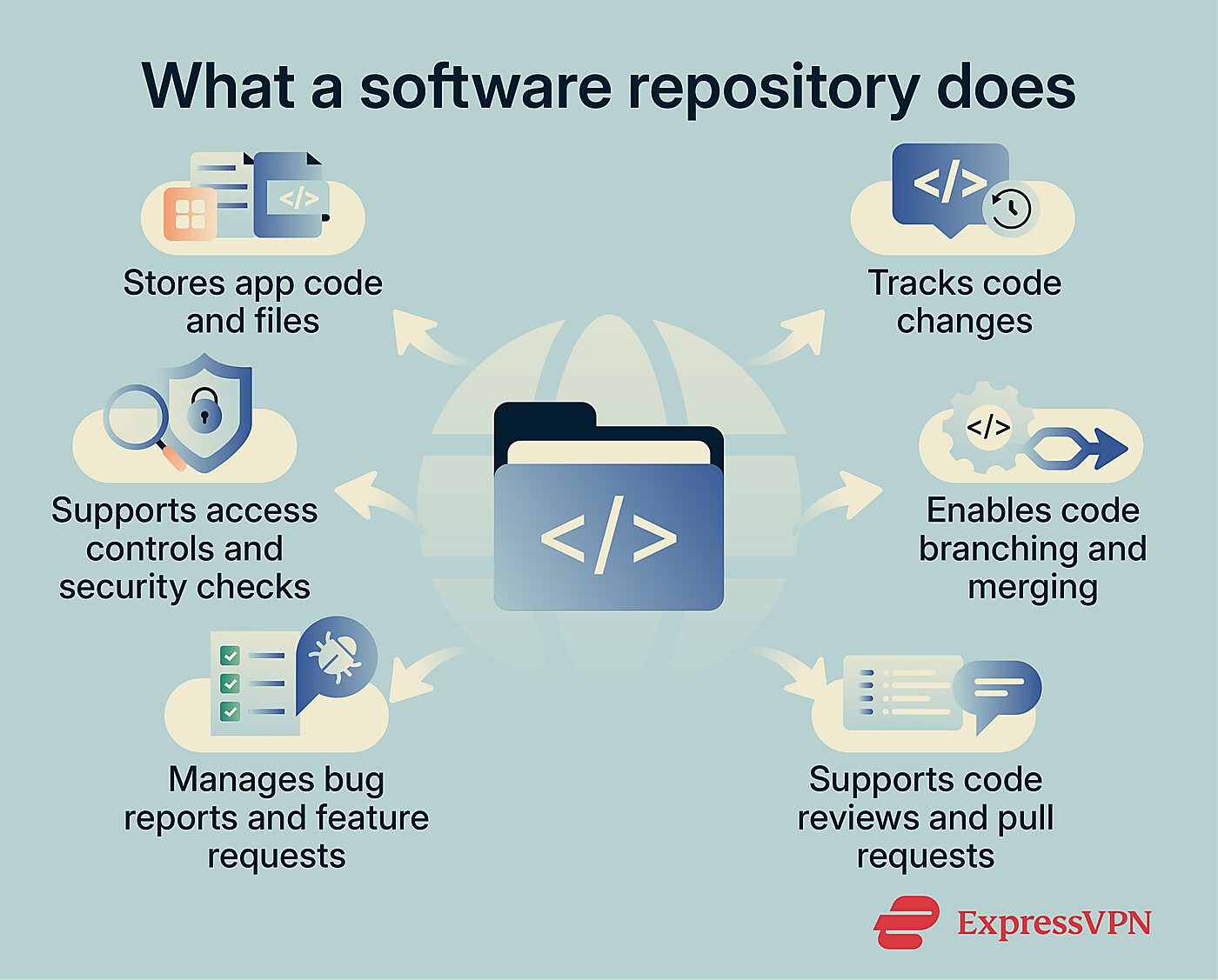
A software repository, often shortened to repo, is a centralized digital location where developers store, manage, and track changes to software projects and related files, such as folders, documents, images, and notes.
Software repository features
Most repositories include features that help streamline and secure development, such as:
- Version control: Tracks changes in the repository, showing when edits were made, who made them, and what changed.
- Branching and merging: Lets developers create parallel versions of the main codebase, called branches, to work on new features or bug fixes in isolation before merging them back.
- Collaboration tools: Supports code reviews, discussions, and pull requests, allowing multiple developers to contribute efficiently to the same project.
- Issue tracking: Allows developers to report bugs, request new features, and discuss potential improvements to the codebase.
- Access controls and security: Enables user permissions and security checks to help restrict unauthorized access and identify vulnerabilities or malicious packages.
Types of software repositories
Key types of software repositories include:
- Package manager repositories: Host software packages in compiled or installable formats, allowing developers to download and integrate them into projects more easily.
- Source code repositories: Store raw source code and are typically managed with version control systems that track changes over time.
- Data repositories: Store large collections of datasets and related metadata, such as author, version, license, and creation date.
- Infrastructure repositories: Store Infrastructure as Code (IaC) files used to provision and manage infrastructure resources, such as servers, networks, and cloud environments.
Risks and privacy concerns
Despite being valuable during development, software repositories can put data at risk if not properly secured. Common examples include:
- Weak access controls may let unauthorized users view or modify source code if privileged accounts are compromised.
- Repositories may include references to outdated or unpatched dependencies that introduce security vulnerabilities into the application.
- Malicious actors may use automated tools to scan commits and discover hardcoded sensitive data, such as credentials, API keys, and authentication tokens
- Attackers may compromise trusted components in the software development pipeline, such as dependencies, build tools, or developer accounts, to distribute malicious code.
Further reading
- What is F-Droid and should you use it?
- The importance of software updates
- How to prevent the download of malicious code
FAQ
What is the difference between a software repository and a source code repository?
A software repository is a centralized digital location where developers store software-related files. A source code repository is a type of software repository specifically designed to store and manage source code.
How do package managers use software repositories?
Package managers are tools that download software packages from package repositories, which host libraries, dependencies, and other software components in installable formats. This allows developers to quickly install, update, and integrate external tools into their development workflows.
Are software repositories secure?
Software repositories often include security features, such as access controls, encryption, and audit logging, that help protect source code and related files. However, poor configuration, human error, and weak security practices can still expose repository data to threats such as unauthorized access, supply chain attacks, and leaked secrets.
What is the difference between public and private repositories?
Public and private repositories primarily differ in visibility and access controls. Public repositories are commonly used for open-source projects because they’re visible to anyone on the internet, allowing users to view and, in some cases, contribute to the codebase. Private repositories are typically used for proprietary or confidential projects because access is restricted to the owner and authorized collaborators.
Can a compromised repository spread malware?
Yes, a compromised repository can be used to spread malware. Attackers may gain access to developer accounts through phishing attacks, inject malicious code into trusted software packages or codebases, or distribute tampered copies of legitimate repositories to trick users into downloading infected versions.